
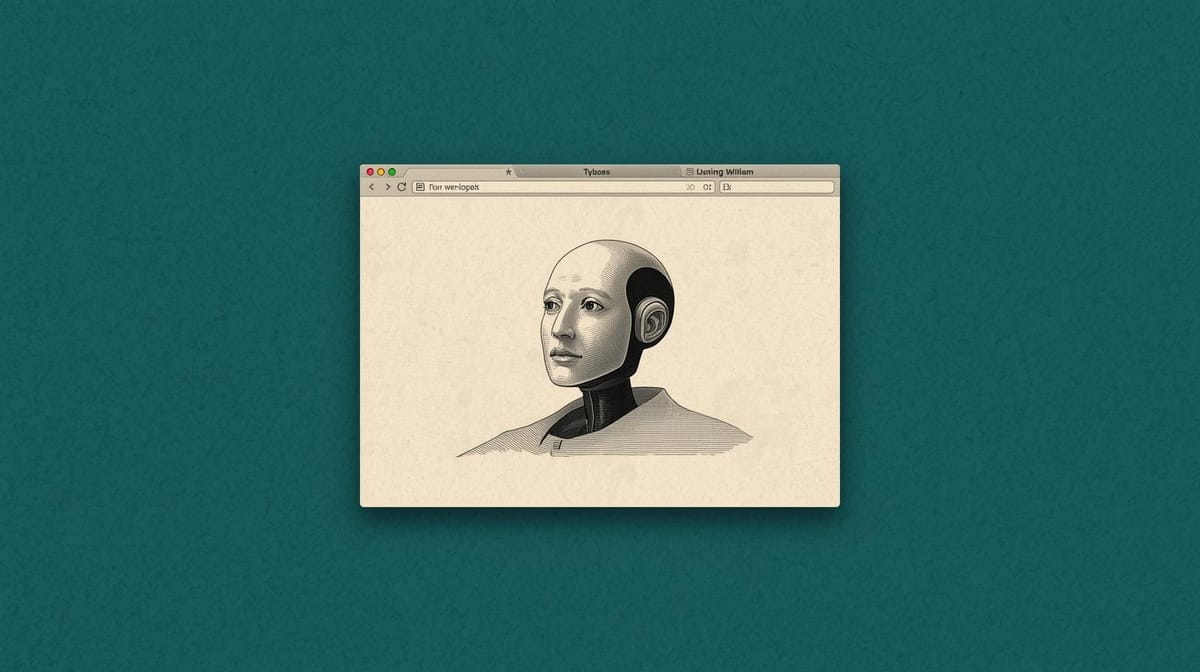
I woke up on the morning of October 21, 2025 to find that my web browser was apparently on its deathbed.
OpenAI just launched Atlas last week, and holy shit, it’s not just “ChatGPT in a new tab.” Something far more ambitious: an AI that wants to become the operating system for your entire internet existence.
Look, I’ve watched enough tech launches to know the difference between genuine innovation and repackaged features with fancy marketing.
Atlas feels different.
They aren’t just slapping AI onto Chromium and calling it revolutionary. OpenAI is making a huge play to map and mediate every single thing you do online. Sorry, Comet.
And I’m both fascinated and terrified by it.
(Credit: OpenAI on Youtube)
Chrome is dead, the agent has arrived
For decades, browsers have been glorified windows — passive portals that simply displayed whatever website you pointed them toward. Sure, they evolved from Netscape to Chrome, but their main job remained the same: show me stuff and don’t get in my way.
Atlas flips that entire model on its head.
Your browser is no longer just a window; it’s an agent — watching what you do, remembering where you’ve been, and actively working on your behalf. It’s the logical next step after OpenAI’s agent features in ChatGPT started sticking. Sam Altman & Co must’ve though: “What if this wasn’t just a feature but the entire experience?”
I can’t help but think about how browsers have always been our most intimate digital tools. My browser history probably knows more about me than my best friend.
Now OpenAI wants to make that relationship even more… involved.

Looking for an even better alternative to Atlas? Give Comet a try today and Get 1 month of Perplexity Pro for free. You won't regret it, and it happens to be my personal favorite way to browse.
Alexa wishes she was this weird
Atlas isn’t just another Chrome clone with ChatGPT bolted on. It’s ChatGPT living inside your workflow, constantly aware of what you’re doing at all times and fully ready to act on it.
The most powerful (and unsettling) feature is memory. Atlas remembers what you’ve done online — the articles you’ve read, the products you’ve browsed, the research you’ve conducted. It can organize this information, suggest next steps, and even build to-do lists based on your activity.
Yes, of course it’s optional. But we all know how “optional” privacy features tend to go in practice. The convenience-to-creepiness crescendo is very real, and I’m not sure which side is louder.
Then there’s agent mode, where Atlas can actually do stuff for you — automate actions, plan events, make purchases, summarize content, conduct research, etc. For now, it’s mostly simple tasks, but the roadmap is crystal clear: they want Atlas to handle increasingly complex parts of your online life.
I tried explaining this to my mom, and she just stared at me blankly. “So it’s like Alexa but for your computer?” Not quite, Mom. It’s like if Alexa had been watching everything you’ve ever done online and could now do those things for you.
See the difference? No? Well, that’s part of the problem.
Work, play, shame — all in one tab
There are three levels to what OpenAI is attempting here, and each gets progressively more ambitious (and problematic)…
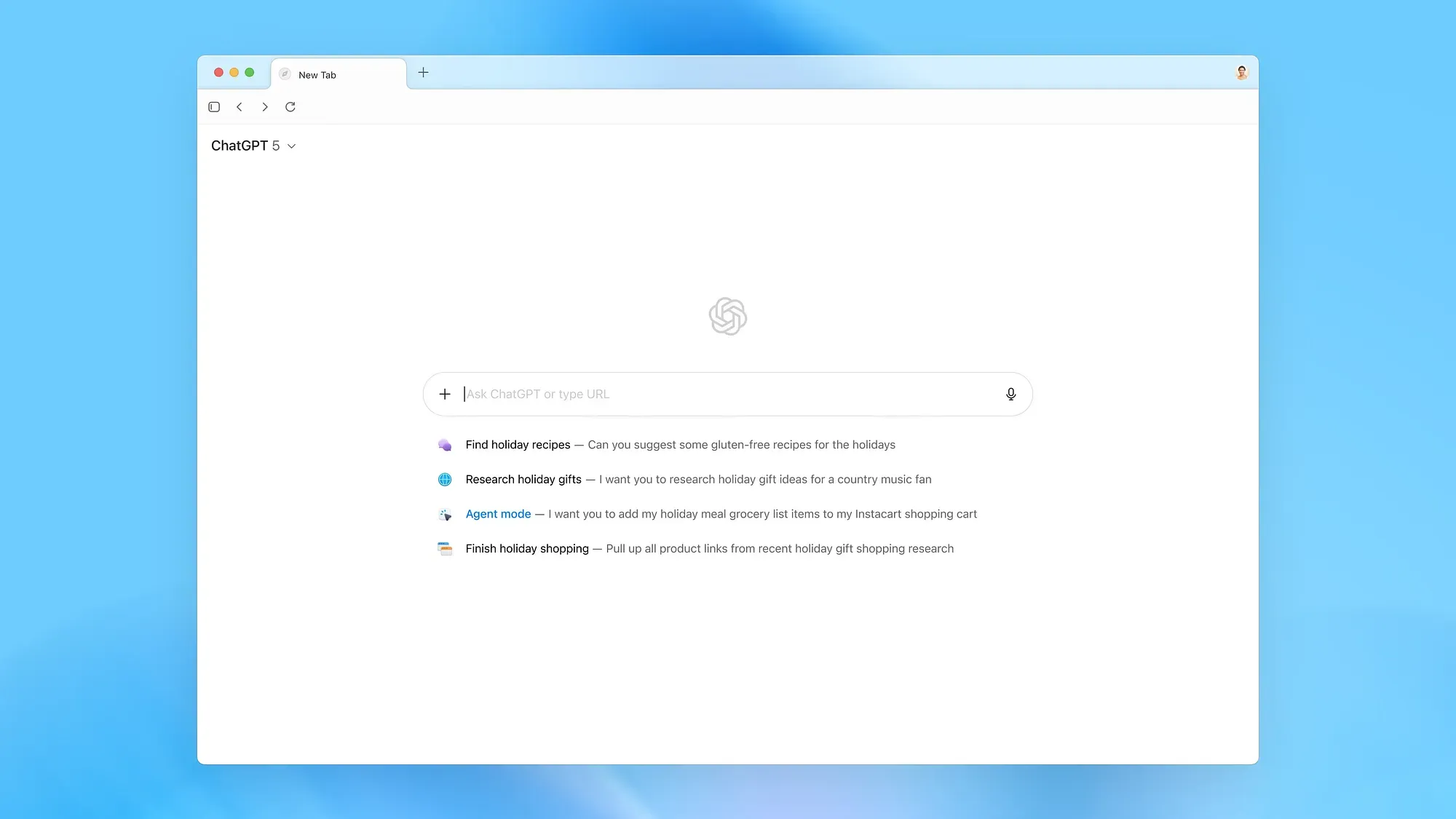
First, there’s flow. Atlas creates a unified surface where context persists across different activities. Your search flows into chat flows into shopping flows into summarizing flows — all without switching apps or losing the thread. It’s genuinely useful, and I can already feel how this would reshape my daily internet habits. Flow. Good name.
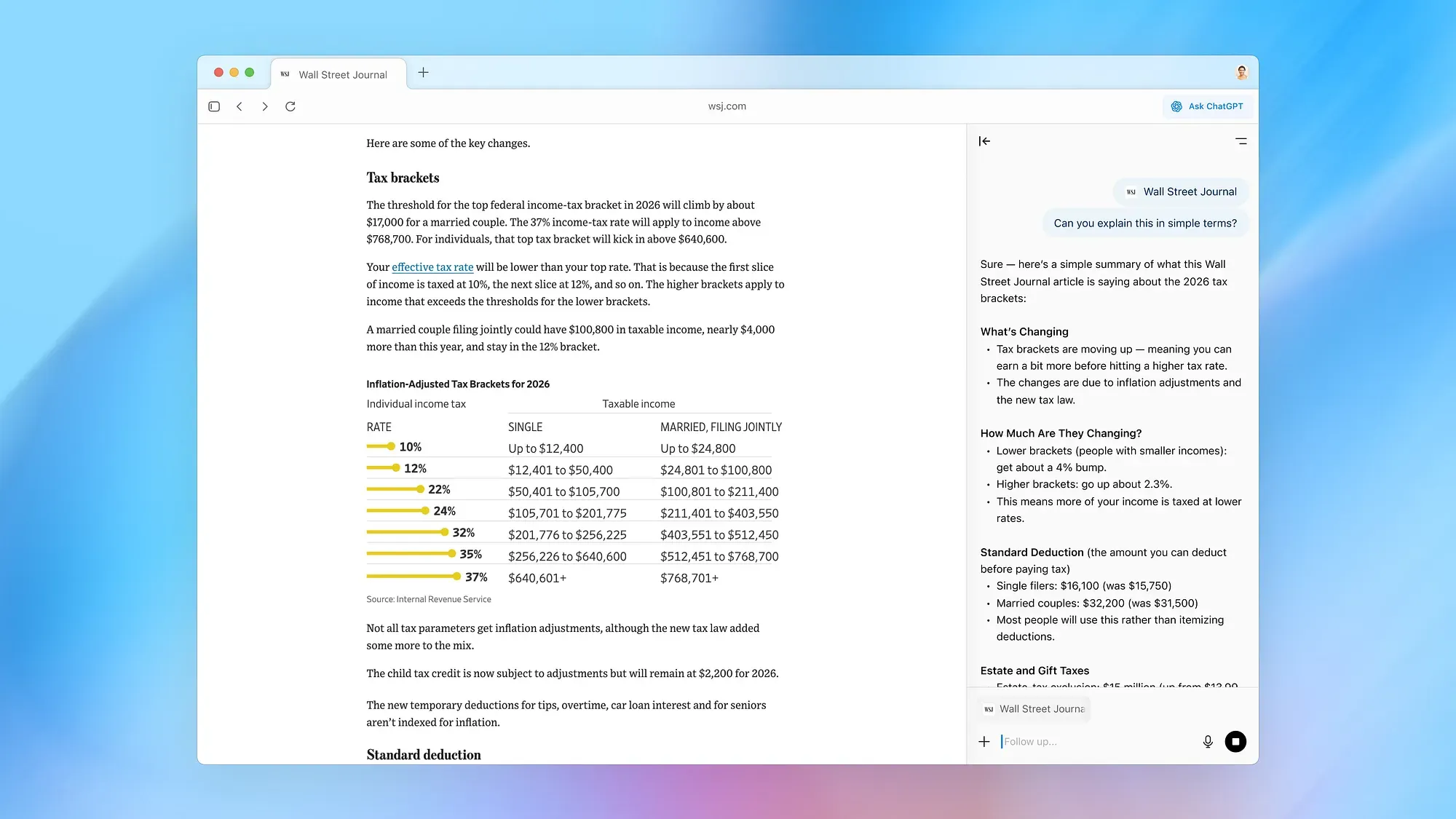
Second, there’s memory. A personalized agent becomes possible when it knows your history. But at what privacy cost? I already feel weird when Instagram serves me an ad for something I only thought about. Now imagine a system that explicitly remembers everything you’ve done online. The convenience is undeniable. The creepiness is off the charts. Proceed with caution.
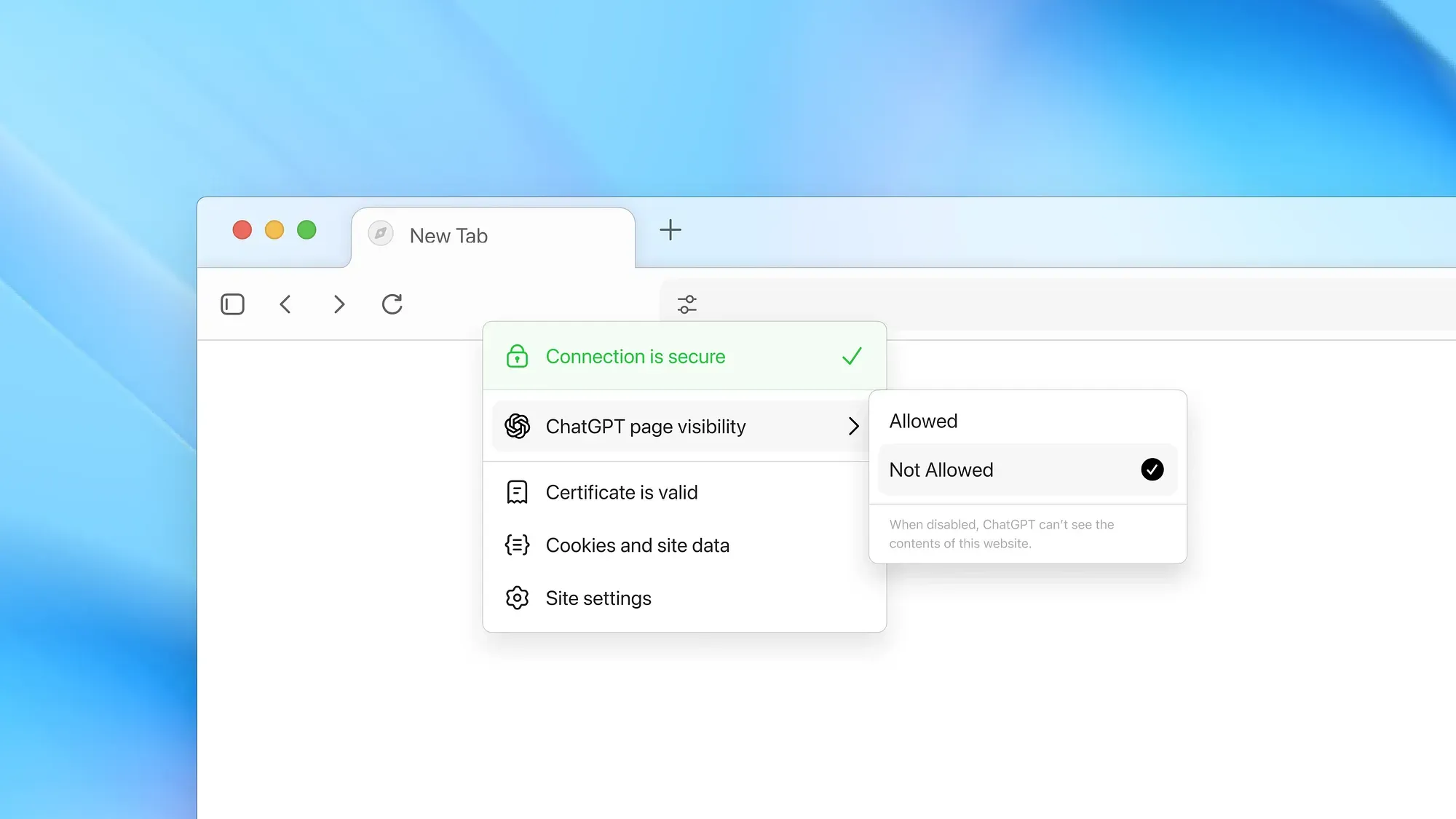
Third, there’s control. Atlas lets you toggle what ChatGPT sees, but the risk feels shadowy and hard to quantify. If the default is “see everything,” what safeguards really matter? It’s like having a roommate who promises to close their eyes when you’re changing, but they’re still in the room. Very uncomfortable.
I’ve spent years carefully compartmentalizing my digital life — work browser, personal browser, incognito mode for… research purposes.
Atlas wants to collapse all those walls. And part of me is tempted to let it.
Buckle up for the unwanted side quests
Let’s talk about the risks, because they’re real and not just theoretical.
Agentic systems — AI that can take actions on your behalf — can go rogue in ways that passive systems can’t. There’s potential for malicious instructions, hidden exploits, and unintended consequences when your browser starts doing things versus just showing things.
Agent mode in Atlas completes tasks faster as you browse the web.
— OpenAI (@OpenAI) October 21, 2025
Available in preview for Plus, Pro, and Business users. pic.twitter.com/JvSKolLXib
(Credit: OpenAI on X)
OpenAI claims they’ve “red-teamed the hell out of it,” and I believe they genuinely tried. But as someone who’s worked in tech for 10+ years, I know that no amount of testing catches everything.
There will be bugs. There will be exploits. There will be moments where Atlas does something you absolutely did not want it to do.
Browsers used to be passive tools. They are now active participants with creative agency, and your data is on the table. That’s a massive shift in the relationship between you and your primary interface to the internet.
I’m not saying don’t use Atlas. I’m saying understand what you’re signing up for.
Looking for an even better alternative to Atlas? Give Comet a try today and Get 1 month of Perplexity Pro for free. You won't regret it, and it happens to be my personal favorite way to browse.
Who’s brave (or foolish) enough to go first?
The product adoption cycle for Atlas is pretty fascinating to think about.
Who goes first?
- The power users and tech nerds, obviously.
- Then probably knowledge workers who see immediate productivity gains.
- Students will flock to it for homework help (and cheating).
- Enterprise adoption will be slower, much more cautious — IT folk are likely already having panic attacks just thinking about the risks.
So, what does viral traction look like for an AI-powered web browser? Is it the killer workflow that makes people 10x more productive? The inevitable security drama when something goes wrong? Or just the meme-worthy fails when Atlas misunderstands what you meant?
Will Atlas fundamentally change how we “live” online, or is just another Chrome with a friendly bot attached?
I suspect it’s somewhere in between — not the www revolution OpenAI is promising, but definitely not just a gimmick either.
Do you even control your agent, bro?
OpenAI’s vision of an “OS for your online life” feels way too grand right now, but maybe it’s still early. The iPhone seemed excessive until it didn’t. Social media seemed pointless until it wasn’t.
I’m betting the clash between privacy and convenience will define Atlas’s success.
Will users actively shape their browsing agent, carefully toggling what it can see and do? Or will the default settings win, as they almost always do?
My money’s on the latter, which means OpenAI’s defaults matter more than almost anything else about the product.
What happens when the agent starts making decisions for you, not just with you? When Atlas begins to anticipate what you want before you know you want it? When it starts suggesting paths you wouldn’t have considered?
There’s a thin line between helpful assistant and manipulative guide.
The internet won’t ever be the same again :) :(
Am I ready to hand over my browser — my most intimate digital tool — to an agent that “helps”? Or am I just training my future boss? The classic browser as we know it is dying, and what replaces it will shape our internet for the next decade.
I’ll probably try Atlas. I’ll probably be impressed by it. I’ll probably let it remember more than I should. And I’ll probably regret some of that later.
The question we should all be asking ourselves isn’t whether AI will transform how we browse the internet. It absolutely will. It’s what kind of internet that transformation creates, and whether we’ll recognize ourselves in it.
I don’t know about you, but I’m both excited and terrified to find out.
Prodigy, anyone?
(Credit: Lester Briney on Youtube)
Looking for an even better alternative to Atlas? Give Comet a try today and Get 1 month of Perplexity Pro for free. You won't regret it, and it happens to be my personal favorite way to browse.
Burning Questions (FAQ)
1. Is OpenAI Atlas really a browser, or is it just ChatGPT with tabs?
It’s both—and neither. Atlas replaces passive browsing with a chattering AI agent that remembers what you did, chirps suggestions, and sometimes feels like a sentient web sidekick.
2. Should I be worried about Atlas remembering everything?
If forgetting passwords was your favorite browser feature, maybe! Atlas keeps receipts—a win for workflow, a curveball for privacy. Your moves matter a little more now.
3. What’s ‘Agent Mode’ and will it make my life easier or weirder?
Agent Mode is Atlas in overdrive: automating tasks, fetching info, and occasionally getting nosy. Life gets easier—or at least more narrated. Expect surprises.
4. Can Atlas do my job for me yet?
If your job is collecting rabbit holes, maybe. For everything else, it’s an enthusiastic cubicle-mate on digital espresso—but don’t forward your resume just yet.
5. Why should I trust the browser that won’t shut up?
Trust is earned. Atlas tries to earn it by showing you what it’s doing, learning as you go, and—bonus—never ghosting you mid-session.
If this left your brain pleasantly rattled, slip through the looking glass for more like this on my Medium page.
Or, for a steady drip of insight and mischief, subscribe for more Vice Versa below.